TP-Link TD-W8960N Port Forwarding, A Step-by-Step Guide
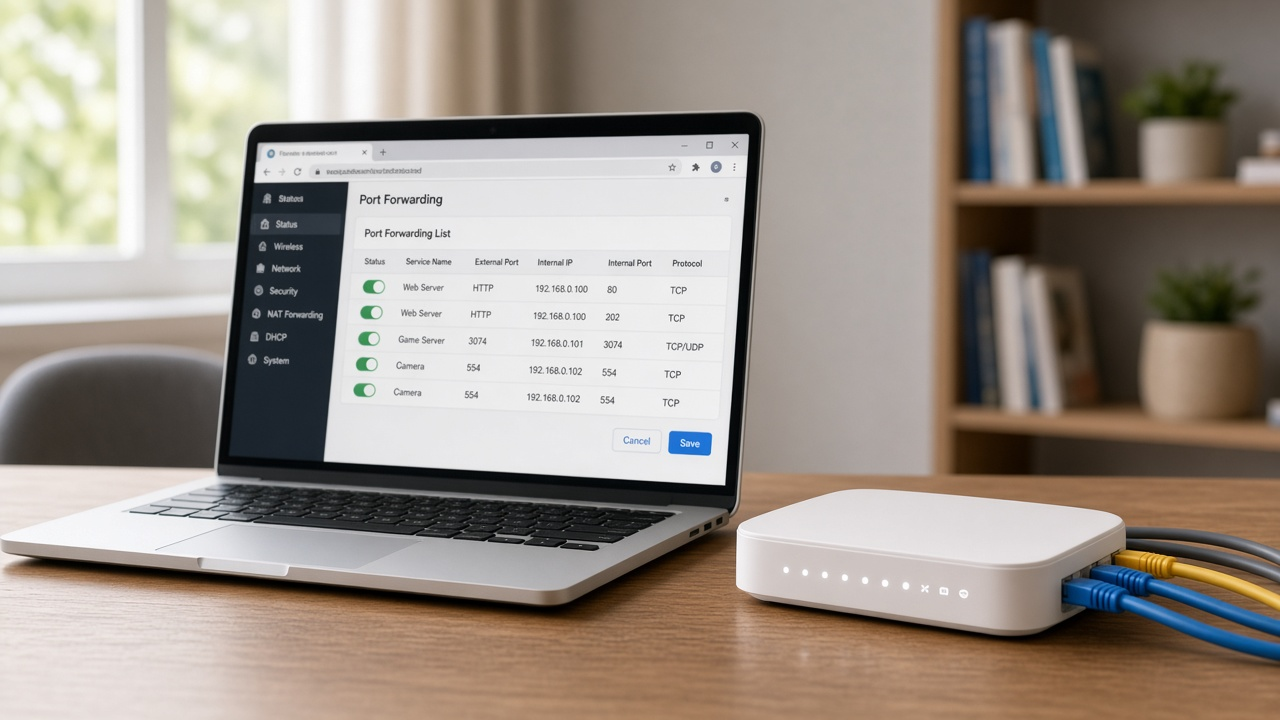
Port forwarding enables external devices to communicate with services running on a local network. By directing data packets through specific ports, users can enhance connectivity for applications such as online gaming, remote desktop access, VoIP services, and hosting game or web servers.
Every device connected to a network relies on IP addresses to send and receive data. Ports, acting as communication endpoints, determine how traffic reaches specific applications. Without proper forwarding, many online services remain inaccessible from outside the local network. Configuring port forwarding on a TP-Link TD-W8960N router ensures seamless external access to designated local resources.
Overview of TP-Link TD-W8960N
Key Features of the TP-Link TD-W8960N Router
The TP-Link TD-W8960N is an ADSL2 modem router that offers a combination of high-speed internet access, wireless networking, and robust security. It supports data transfer rates up to 300Mbps on the 2.4GHz band, ensuring stable connectivity for both home and small office users. Equipped with multiple security features, this router provides reliable network protection while maintaining seamless internet performance.
- ADSL2 Modem and Router Integration: Eliminates the need for a separate modem, reducing equipment clutter and improving network efficiency.
- 300Mbps Wireless N: Utilizes 802.11n technology for enhanced wireless coverage and speed, making it suitable for online gaming, HD video streaming, and VoIP.
- Four 10/100Mbps LAN Ports: Supports wired connections for PCs, gaming consoles, and other network devices, ensuring minimal latency.
- Guest Wi-Fi Support: Allows users to create a separate Wi-Fi network for visitors without compromising internal network security.
- WPA/WPA2 Encryption: Implements advanced security protocols to protect wireless networks against unauthorized access.
- Quality of Service (QoS): Manages bandwidth allocation efficiently, prioritizing applications such as video calls or streaming services.
- Multiple PVCs for ISP Configurations: Supports multiple virtual circuits, enabling seamless connectivity with different internet service providers.
Benefits of Using TP-Link TD-W8960N for Port Forwarding
Port forwarding on the TP-Link TD-W8960N enhances network efficiency by allowing external devices to access internal services without compromising security. This feature supports applications such as online gaming, web hosting, and remote desktop access. The router's user-friendly web interface simplifies port forwarding configuration, reducing setup time and potential errors.
- Stable Performance: Ensures a consistent internet connection, keeping forwarded applications running smoothly.
- Customizable Firewall Rules: Enables users to configure precise access permissions, preventing unwanted access while allowing necessary connections.
- Simple Configuration Process: The web-based interface provides a straightforward method for setting up port forwarding rules without requiring advanced networking expertise.
- Remote Access Capabilities: Allows users to reach devices like security cameras or hosted game servers from external networks.
- Reduced Latency for Online Gaming: Directs traffic more efficiently, minimizing lag and improving overall gameplay experience.
- Seamless Compatibility with Multiple Applications: Supports a wide range of services, including FTP servers, VPNs, and peer-to-peer networking.
Pre-requisites for Port Forwarding
Ensuring Internet Connectivity on Your Network
The TP-Link TD-W8960N must have an active internet connection for port forwarding to work. Verify this by checking if other devices on the network can load websites or access online services. The router's status page also shows the WAN connection status, typically under the Device Info or Status section.
Knowing Your Device's IP Address That Requires Port Forwarding
The device that needs port forwarding must have a static IP address. Use these methods to find its current IP:
- Windows: Open Command Prompt and enter ipconfig. The device's local IP appears under "IPv4 Address."
- Mac: Open Terminal and use ifconfig, locating the value under "inet."
- Linux: Use ip addr show or ifconfig to find the corresponding IP under the correct interface.
Assign a static IP through the device itself or configure DHCP address reservation in the router's settings to prevent changes after reboots.
Gathering the Necessary Port Numbers for Your Application or Service
Different applications require specific ports for proper operation. Refer to the official documentation of the software or service in use. Typical examples include:
- HTTP: Port 80
- HTTPS: Port 443
- FTP: Ports 20-21
- Remote Desktop Protocol (RDP): Port 3389
- Gaming Servers: Varies by game; check developer guidelines
For security, avoid opening unnecessary ports as they can expose the network to potential threats.
Accessing the TP-Link TD-W8960N Interface
Connecting to Your TP-Link Router
Use a wired or wireless connection to link your computer to the TP-Link TD-W8960N router. A wired connection with an Ethernet cable ensures stability, while a wireless connection offers flexibility. Ensure the computer is connected to the same network as the router.
Steps to Access the Router's Web Interface
- Open a web browser such as Google Chrome, Mozilla Firefox, or Microsoft Edge.
- Type the default gateway IP address 192.168.1.1 into the address bar and press Enter.
- The router's login page will load, prompting for authentication credentials.
Default Username and Password
By default, TP-Link TD-W8960N uses:
- Username: admin
- Password: admin
If the login details have been changed previously, use the updated credentials. If access is denied, reset the router to restore factory settings.
Navigating the TP-Link TD-W8960N Settings
Overview of the Router's Dashboard
The TP-Link TD-W8960N router dashboard provides access to all configuration options. Once logged in, the interface presents a sidebar menu on the left, categorized into sections including Status, Quick Setup, Interface Setup, and Advanced Setup. The main panel displays corresponding settings, updating dynamically based on the selection made from the menu.
The Status page gives an overview of current device connections, DSL status, and system information. The Interface Setup section allows modifications to internet, LAN, and wireless settings. For port forwarding, the relevant configurations reside under the Advanced Setup menu.
Finding the Advanced Setup Menu
The Advanced Setup menu contains essential configurations, including NAT settings, firewall rules, and port forwarding options. To locate it, follow these steps:
- Click on Advanced Setup in the left-hand menu.
- Expand the NAT section by clicking on it.
- Select Virtual Servers from the list of NAT options.
The Virtual Servers section is where port forwarding rules are added. This menu allows users to specify external and internal port mappings for different devices connected to the network. The next step involves configuring these settings to direct network traffic efficiently.
Configuring Port Forwarding on TP-Link TD-W8960N
Locating the Port Forwarding Section
Access the router's web interface and locate the port forwarding settings. In the TP-Link TD-W8960N interface, navigate through the menu:
- Click on Advanced Setup.
- Select NAT from the left-hand menu.
- Click on Virtual Servers.
This section allows you to create and manage port forwarding entries.
Steps to Create a Port Forwarding Entry
To configure a new port forwarding rule, follow these steps:
- Click the Add button to open the configuration screen.
- Select the Interface that connects to the internet (usually pppoe0 or similar).
Selecting the Service Type (TCP/UDP)
Specify the type of traffic allowed through the forwarded port. Use the dropdown menu to choose one of the options:
- TCP – Required for most web applications and file transfers.
- UDP – Used for streaming, gaming, and VoIP services.
- Both – Select this if the application requires both protocols.
Entering the IP Address of the Device
Enter the internal IP address of the device that requires the forwarded port. This IP address must be static or DHCP-reserved to prevent conflicts.
Specifying the Port Range
Define the port or range of ports to be forwarded:
- For a single port, enter the same value in both the Start and End fields.
- For a range, enter the lowest and highest port numbers required.
Many games and applications provide a list of necessary ports in their documentation.
Clicking the 'Add' Button to Save the Entry
Once all fields are correctly filled out, click Save/Apply to add the rule to the port forwarding list.
Saving and Applying Port Forward Settings
How to Verify Entries Before Saving
Incorrect configurations waste time and cause connectivity issues. Reviewing settings before saving prevents errors and ensures proper functionality. Confirm that all required fields contain accurate values.
- Port Range: Check if the specified port numbers match the application's requirements.
- Protocol: Ensure the selected protocol (TCP, UDP, or both) corresponds to what the service needs.
- Internal IP Address: Verify that the destination IP matches the intended local device.
- Status: Confirm that the rule is enabled to allow traffic through.
Double-checking these details prevents common misconfigurations and reduces troubleshooting time.
Clicking the 'Save' or 'Apply' Button
After verifying the settings, apply them by clicking the relevant button. On the TD-W8960N, the names may vary between ‘Save’ and ‘Apply’ depending on the firmware version.
- Locate the 'Save' or 'Apply' button at the bottom or side of the configuration screen.
- Click it to store the port forwarding rule.
- Wait for the router to confirm the changes.
A confirmation message may appear, indicating that the settings have been applied successfully. If an error occurs, review the entries and try again.
Waiting for the Router to Reboot if Necessary
Some routers require a reboot to apply port forwarding changes effectively. The TD-W8960N may not always need this step, but checking for any prompts ensures proper functionality.
- If the router prompts for a restart, confirm the action.
- Allow the device to complete the reboot process before proceeding.
- Re-login if needed to verify the new settings.
Once restarted, the router should begin forwarding traffic based on the configured rules.
Troubleshooting Common Port Forwarding Issues
Incorrect configurations, conflicting settings, or ISP restrictions can prevent port forwarding from working correctly. Identifying the cause requires checking multiple settings and making adjustments where necessary.
Incorrect IP Address or Port Numbers
Entering the wrong IP address or port number in the port forwarding rule leads to failed connections. Verify these details using your device settings:
- Check the Local IP Address: The port forwarding rule should point to the correct IP address of the device. On Windows, run ipconfig in Command Prompt and look for the "IPv4 Address" under the network adapter in use.
- Ensure Static IP Assignment: If the local device receives a dynamic IP via DHCP, it may change, breaking the port forwarding rule. Assign a static IP within the network range of the router.
- Confirm Port Numbers: The configured ports must match the ones required by the application. Some applications use multiple ports or UDP and TCP separately.
Router Firewall Settings
The router’s firewall may block forwarded traffic by default. Adjusting firewall settings ensures proper packet transmission:
- Disable SPI Firewall Temporarily: The TP-Link TD-W8960N includes Stateful Packet Inspection (SPI), which may block unsolicited inbound traffic. Disabling SPI under the "Advanced Security" section may resolve the issue.
- Allow Ports in Security Settings: Some security settings classify forwarded ports as untrusted. Check the firewall rules and manually add an exception if required.
- Verify NAT Settings: Some configurations use strict Network Address Translation (NAT), preventing external access. Switching to a more permissive NAT mode, if available, can improve connectivity.
Conflicts with ISP Restrictions
Internet Service Providers (ISPs) sometimes prevent port forwarding due to network policies. Identifying and addressing these restrictions may require additional steps:
- Check for CGNAT (Carrier-Grade NAT): If the ISP assigns a private WAN IP instead of a public IP, traditional port forwarding won’t work. Visit WhatIsMyIP and compare the displayed IP with the router’s WAN IP. A mismatch indicates CGNAT, requiring port forwarding alternatives such as a VPN or dedicated IP service.
- Confirm Blocked Ports: Some ISPs block specific ports (e.g., 80, 25) for security reasons. Switching to unused ports or contacting ISP support can provide a solution.
- Request a Public IP: If CGNAT is in use, requesting a public IP address from the ISP may resolve forwarding issues, though some providers offer this only for business plans.
Checking each of these components systematically identifies and resolves most port forwarding failures. If problems persist, reviewing router logs or employing external port testing tools may provide additional insights.
Security Considerations for Port Forwarding
Potential Risks Associated with Port Forwarding
Port forwarding exposes internal devices to external traffic, increasing the risk of unauthorized access. Attackers scan open ports to find vulnerabilities, potentially exploiting weak security configurations. Common threats include unauthorized remote access, malware injections, and data breaches. To minimize risks, selectively forward only necessary ports and use firewall rules to limit access.
Creating Strong, Secure Passwords for Your Router
Default router passwords are easy targets for attackers. Changing the default credentials immediately reduces risk. A strong password should contain at least 12 characters, combining uppercase letters, lowercase letters, numbers, and symbols. Avoid dictionary words and predictable sequences. Updating passwords periodically further strengthens security.
Keeping the Router’s Firmware Up to Date
Manufacturers release firmware updates to patch security vulnerabilities. Running outdated firmware increases exposure to known exploits. Check for updates regularly through the router’s web interface. If automatic updates are not available, download firmware updates directly from the TP-Link support website and apply them manually following the provided instructions.
Optimizing Your Port Forwarding Setup: Best Practices
Refining Port Forwarding on the TP-Link TD-W8960N
Successful port forwarding on the TP-Link TD-W8960N involves correctly mapping external requests to internal devices. Every step, from accessing the router's interface to configuring specific rules, determines whether a service operates seamlessly.
Maintaining Security After Port Forwarding
Exposing ports increases potential points of vulnerability. Reducing risks requires limiting open ports to only those necessary, keeping firmware updated, and routinely reviewing active forwarding rules.
Best Practices for Network Stability
- Schedule regular configuration reviews: Periodically check port forwarding rules to ensure they align with current use.
- Enable firmware updates: Running the latest router firmware mitigates vulnerabilities.
- Monitor connected devices: Remove unused forwarding rules for devices no longer in use.
- Use strong passwords: Secure the router interface by setting a robust administrator password.
- Test forwarded ports: Validate changes using external tools to confirm correct operation.
Engage and Stay Updated
Share experiences or troubleshoot issues in the comments section below. For advanced configurations, contact TP-Link support. Stay informed about new networking guides by subscribing to updates or following us on social media.