The Best Starlink Alternatives for Your Home (2026)
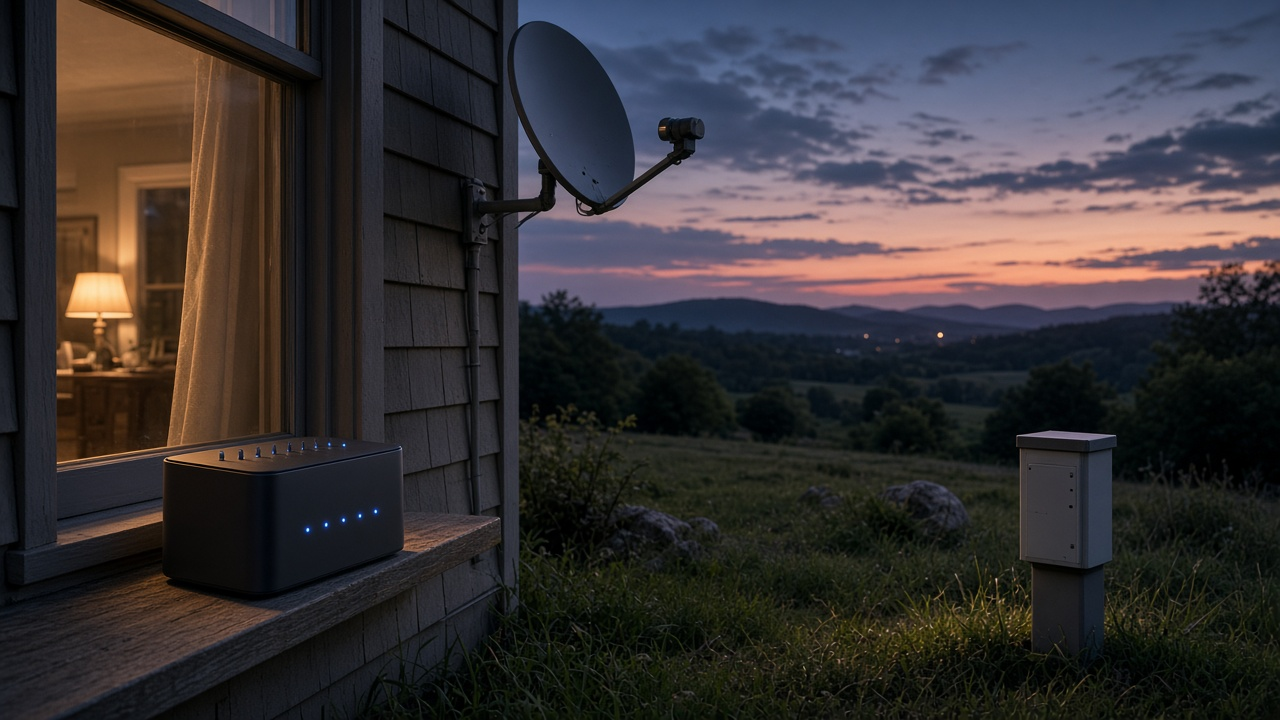
Starlink has rapidly become one of the most recognizable names in satellite internet, reaching underserved and rural areas worldwide with low-Earth orbit technology. Tens of thousands of households have adopted its high-speed, low-latency service, and usage numbers have surged since the beta launch in 2020.
Yet, many households examine other options. What drives this search? Monthly subscription costs typically start at $120 for residential users in the US (SpaceX, 2024), which stretches budgets. Equipment fees, supply shortages, and regional limitations also influence decisions, while some users compare download speeds—ranging from 25 Mbps to over 110 Mbps, depending on network congestion—to what competing technologies offer. Coverage gaps persist, and for many, faster or more affordable service from alternative providers remains a top priority.
How do you decide which provider suits your situation? Have you compared not only speed and data plans but also mobile connectivity, contract terms, and rural broadband options in your area? Explore each aspect with care to match your household’s unique digital demands, ensuring smooth streaming, effective remote work, and reliable connections for every device.
Understanding Starlink: A Quick Recap
What is Starlink?
Starlink delivers satellite-powered internet directly to users’ homes using a network of low Earth orbit (LEO) satellites. This service, developed by SpaceX, has rapidly expanded since its public beta in October 2020. By 2024, the Starlink constellation includes over 5,600 operational satellites, enabling coverage throughout North America, Europe, Australia, and much of South America and Asia. Installation involves a proprietary terminal, a mounting tripod, and a WiFi router, forming a direct link to the Starlink network.
Key Offerings: Data Speeds, Coverage, Plans, and Cost
- Data Speeds: Starlink customers experience download speeds between 25 and 220 Mbps, while upload speeds range from 5 to 25 Mbps, according to tests conducted by Ookla (Q1 2024). Latency remains low for satellite internet, averaging 25-50 ms.
- Coverage: Starlink currently reaches more than 70 countries, with expansion mapped for further global reach. Users in rural, remote, and underserved geographies make up a growing share of its customer base.
- Plan Options: Starlink offers residential, RV/mobile, business, and maritime plans. The standard residential plan suits most home users, though specialized plans unlock portability or higher bandwidth.
- Cost: The typical upfront equipment fee is $599 (as of June 2024), with monthly service pricing from $120 for residential plans. Business packages — featuring prioritized bandwidth — begin at $250 per month. For mobile/RV plans, users pay only for months of actual usage instead of maintaining a continuous subscription.
Pros and Cons of Starlink Satellite Internet
- Pros: Rapid installation compared to many terrestrial providers; available in regions beyond the reach of fiber, cable, or DSL; low latency compared to geostationary satellite internet. No data caps on most plans, and straightforward setup requiring few specialized skills.
- Cons: Higher prices than many wired broadband providers; variable performance during heavy network congestion or inclement weather; noticeable drops in speed and reliability in dense urban areas or locations with obstructions like trees and buildings. Users must pay equipment costs upfront, which can act as a barrier to entry for some households.
Why Look for Starlink Alternatives?
Weighing Key Drawbacks: Cost, Installation, Speed, and Data
Starlink rose to prominence by promising global satellite coverage, but actual user experiences shine a light on specific challenges. Subscription fees start at $120 per month in the US as of 2024, according to SpaceX; hardware purchases typically exceed $599 upfront. Installation can involve self-service setup, yet many users in challenging terrain opt to pay additional fees (ranging from $200 to $650 for professional installation). This brings immediate costs above those of established wired providers.
Performance fluctuations also affect user satisfaction. Median Starlink speeds in the US, based on Ookla’s Speedtest Intelligence Q1 2024, show downloads averaging 67 Mbps and uploads near 8 Mbps. However, data indicates performance varies significantly by location and time of day, especially during peak evening hours. For households with multiple users, these speed drops can impact streaming, gaming, and remote work.
Standard Starlink plans impose a 1 TB data usage cap per month, after which speeds may be throttled. Heavy users frequently exceed this threshold, particularly when running multiple cloud backups, video calls, or UHD streaming.
Broadband Needed Everywhere: The Rural Coverage Challenge
Millions of Americans, including residents in Alaska, rural Midwest, and Tribal lands, seek viable broadband. The FCC reported in 2023 that about 18 million people in the US still lack access to internet speeds above 25 Mbps, with rural areas most affected. Geography and infrastructure gaps drive demand for options beyond Starlink, as some regions contend with slow fulfillment of hardware shipments and service activations.
- Think about your household’s monthly bandwidth requirements. Would a throttled connection disrupt work or school?
- Are there wired or fixed wireless alternatives already serving nearby properties?
Starlink Compared: Strengths and Weaknesses Versus Other Services
Compared to cable, fiber, DSL, and 5G fixed wireless, Starlink excels by not depending on buried cables or towers. Users in completely remote areas may find it the only available option. However, cable and fiber consistently deliver higher speeds and lower latency. For example, fiber-to-the-home (FTTH) providers such as AT&T, Verizon Fios, and Google Fiber offer 500–2,000 Mbps with sub-10 ms latency, while Starlink’s latency usually measures between 40 and 65 ms, based on Ookla Q1 2024 results.
Curious about how your local options actually stack up? Enter your zip code on comparison platforms or check real-world performance maps shared by providers and customer groups.
Top Alternative Internet Technologies
Fiber Optic Internet
Fiber optic internet delivers data through thin strands of glass or plastic, using pulses of light to achieve rapid transmission speeds. Modern fiber networks offer symmetrical upload and download speeds up to 10 Gbps, which eclipses Starlink's median performance of about 100-200 Mbps down and 10-20 Mbps up (Ookla Speedtest Global Index, 2023). Latency commonly sits between 5-20 ms, while Starlink averages 25-50 ms. These advantages stem from fiber’s immunity to weather interference, a common challenge for satellite networks.
- Reliability: Fiber networks experience less downtime, with uptime rates exceeding 99.9% according to the Federal Communications Commission (FCC, 2022).
- Cost: Average monthly prices for gigabit fiber plans in the US range from $60 to $90 (Consumer Reports, 2023), compared to Starlink’s $120 residential rate.
- Availability: Providers like Google Fiber, AT&T, and Verizon Fios extend service primarily in urban and suburban areas. The FCC (2023) reports that 45% of US households have access to fiber; rural access remains limited.
5G Home Internet
5G networks, originally designed for mobile connectivity, now support home internet via wireless gateways. Providers like T-Mobile and Verizon leverage widespread 5G cell sites, so users in covered areas simply plug in a router—no trenching cables required.
- Mobility: With a portable router, users can move service between properties or even use it on the road within the provider's coverage area.
- Speeds: Most 5G home internet plans yield average download speeds of 100–300 Mbps and uploads from 10–25 Mbps, according to OpenSignal (2023). Peak performance in strong signal areas can exceed 1 Gbps.
- Plan Flexibility: Plans often lack contracts and feature unlimited data, simplifying switching or seasonal use.
- Emerging Coverage: 5G network expansion accelerates each quarter; GSMA Intelligence forecasts that by late 2024, 5G will reach over 76% of the US population. Service in rural zones remains inconsistent but is growing.
Fixed Wireless Internet
Fixed wireless providers beam internet from local towers to an outdoor receiver on the user’s property. Unlike mobile wireless or satellite, this system relies on direct line-of-sight connections, which streamlines installation.
- How It Works: A base station broadcasts a radio signal to subscriber antennas, connecting homes to high-speed internet without relying on cable infrastructure.
- Speeds and Pricing: Commercial offerings frequently advertise 25–100 Mbps downloads, with pricing typically between $50 and $80 per month (BroadbandNow, 2023).
- Suitability for Remotely Located Homes: In rural and semi-rural communities, fixed wireless often fills the broadband gap left by cable and fiber.
- Providers: Companies such as Rise Broadband and Nextlink operate large rural and suburban networks.
Traditional Satellite Internet Providers
Legacy satellite internet companies, such as Viasat and HughesNet, have served remote areas for over two decades with networks powered by geostationary satellites.
- Performance: Viasat’s residential plans currently advertise speeds up to 100 Mbps; HughesNet offers plans maxing out at 50 Mbps. However, real-world speeds may vary with network congestion and weather.
- Latency: Both Viasat and HughesNet typically see latency above 500 ms due to higher orbital distances.
- Data Plans: Plans include monthly data caps usually ranging from 30 GB to 150 GB, with speed throttling after reaching the cap.
- Coverage: Coverage spans the continental US and extends to Alaska, Puerto Rico, and select global regions.
- Pricing: Monthly prices range from $65 to $200, depending on speed and data allowance, based on official provider websites (2024).
DSL vs. Satellite: Comparing Entry-Level Options
DSL as an Alternative in Certain Locations
Households located near telephone infrastructure often consider Digital Subscriber Line (DSL) as a viable entry-level internet solution. Unlike fiber or cable, DSL data transmits over existing copper phone lines, enabling wide coverage in suburban and rural areas where other wired options remain limited. Legacy telecommunication networks service over 25 million U.S. homes with DSL connections according to the Federal Communications Commission (FCC, 2023).
While large urban centers lean toward faster technologies, communities outside major cities—especially those with limited cellular coverage—may find DSL providers as their primary wired alternative to satellite.
Speed, Reliability, and Cost Breakdown
Let’s break down the data. Entry-level DSL packages typically offer download speeds between 5 Mbps and 35 Mbps, though maximum speeds depend on the quality and proximity of wiring from your residence to the nearest telephone exchange. For reference, AT&T’s basic DSL service lists rates starting at 10 Mbps, while Frontier offers plans up to 25 Mbps in eligible areas (AT&T, Frontier, 2024). Monthly costs generally range from $40 to $60 before taxes and fees.
In contrast, fixed satellite internet options such as Viasat or HughesNet provide download speeds up to 100 Mbps, but entry-level plans more commonly start around 25 Mbps. Pricing for satellite service skews higher, with base plans averaging $60 to $80 per month, and often include strict monthly data caps of 15 GB to 100 GB, leading to throttled speeds after thresholds are met (Viasat, HughesNet, 2024).
Reliability varies by environment. DSL connections maintain consistent performance during adverse weather since signals travel through buried or insulated lines. Conversely, satellite connections may falter during heavy rain, thunderstorms, or when obstacles like dense tree coverage obstruct the line of sight to the orbiting satellite.
Satellite Strengths and Weaknesses versus DSL Service
- Satellite internet bypasses the need for local infrastructure entirely, delivering access to remote homes beyond the reach of even basic telecommunication lines—a capability DSL cannot match.
- Although satellite promises higher theoretical top speeds, actual user experience frequently lags due to increased latency. Geostationary satellites introduce a roundtrip delay averaging 600 milliseconds or more, making real-time applications such as video calls and online gaming challenging. In contrast, DSL’s latency often remains below 50 milliseconds, improving web browsing and interactive experiences.
- Satellite data limits can restrict large downloads and streaming, while DSL plans often provide unlimited data—even on entry-level accounts—enabling users to stream music, browse, and work with less anxiety about overages.
If you could gain access to both, which technology would you prioritize for daily tasks like streaming, virtual meetings, and web browsing? Consider your household’s monthly data use—would a hard cap hamper your work or leisure time, or would you trade bandwidth freedom for the broad reach of satellite’s footprint?
Rural Internet Solutions: Broadband Where You Need It
Overview of Technology Choices for Rural Homes
High-speed broadband in rural areas depends on factors like your location, community size, landscape, and available infrastructure. Several broadband technologies target rural and remote regions, but not all of them deliver the same speed, latency, or reliability. Wired options, such as fiber and DSL, remain rare in sparsely populated regions—rural fiber covered only about 32% of rural Americans according to the FCC’s 2022 deployment report, and DSL lines often provide lower performance.
Wireless solutions step in where wired connections can’t reach. Fixed wireless access, using radio towers to beam signals directly to your home antenna, continues to expand. According to the BroadbandNow 2023 data, over 47% of rural Americans have access to at least one fixed wireless provider, and coverage keeps growing. Satellite, both from geostationary providers and the new generation of low-earth orbit (LEO) operators, covers virtually all US land area.
- LEO Satellite: Providers like Amazon’s Project Kuiper, OneWeb, and Eutelsat’s Eutelsat OneWeb have started to roll out services using LEO constellations. These alternatives, alongside Starlink, offer reduced latency (typically 40-100 ms) and higher speeds compared to traditional GEO satellite operators.
- Fixed Wireless: Rural ISPs, including Rise Broadband and Nextlink, deliver speeds varying from 25 Mbps to over 100 Mbps, depending on tower proximity and line of sight.
- 4G LTE/5G Home Internet: Telecom giants (Verizon, T-Mobile, and UScellular) deploy rural-specific LTE and 5G home internet plans. T-Mobile’s 5G Home Internet currently covers over 60 million rural addresses, with average speeds ranging from 33 to 182 Mbps (T-Mobile, 2024).
- Traditional GEO Satellite: Viasat and HughesNet provide nationwide coverage, but higher latency (600 ms or more) and restrictive data caps limit real-time use.
Which Alternatives to Starlink Make Sense in Rural/Remote Regions?
Deciding on a viable Starlink alternative will depend on local infrastructure, pricing, and data needs. When physical wiring is unavailable, fixed wireless frequently outperforms GEO satellite on speed, data allowances, and cost. According to FCC’s 2023 Broadband Deployment Report, over 65% of rural census blocks now have fixed wireless coverage, though weather and terrain may affect performance.
LEO satellite services rival Starlink on coverage but may offer varying speeds and pricing models based on constellation maturity. For homes within 10-20 miles of a cellular tower, 5G and LTE home internet delivers competitive broadband without lengthy installations. Curious about whether you qualify? Coverage checkers on each provider’s website allow quick address-based eligibility searches.
Coverage and Availability Comparison
- LEO satellite systems, including Starlink and OneWeb, deliver near-universal coverage, making them viable in extremely remote areas where no wireless or cellular connectivity exists.
- Fixed wireless reaches broad swathes of rural America but depends on local tower density, provider network upgrades, and clear line of sight.
- Cellular home internet success hinges on proximity to towers supporting home broadband; T-Mobile, for instance, covers 98% of Americans but only portions at sufficient 5G speeds for home use.
- GEO satellite, while available everywhere, remains a choice of last resort due to high latency and lower effective speeds.
If you live or work outside major population centers, which rural broadband technologies catch your attention? Check your address against multiple provider maps—BroadbandNow and the FCC National Broadband Map offer up-to-date, address-level availability guides.
Key Evaluation Criteria for Choosing Your Internet Service
Speed Comparisons: How Fast is Fast Enough?
Internet users stream video in 4K, participate in video calls, and download large files daily. Average households require 50–100 Mbps for smooth streaming and multi-device usage, according to the FCC’s 2023 broadband speed guidelines. Gigabit speeds (1,000 Mbps or higher) become relevant when heavy data transfers or large households are involved. Providers such as Starlink, Viasat, and traditional broadband sometimes advertise theoretical maximums, but real-world speeds fluctuate. Take a moment to assess your usage: How many devices run at once in your home? Does anyone game online or work from home with demanding applications?
Coverage and Availability in Your Area
Even the best plans fall flat if the network doesn’t reach your address. Fiber-optic networks like those from AT&T and Verizon Fios have limited reach in rural zones. Fixed wireless options such as T-Mobile Home Internet and 5G providers rapidly expand, but dead zones persist. Satellite services cover nearly 100% of continental US locations, yet local foliage or building obstructions affect reception. Use each provider’s online address checker—how many providers serve your ZIP code?
Pricing and Data Caps
Some providers charge $40–$80 per month for home internet, while others—especially satellite-based—run over $100, with extra for equipment. Data caps still exist: HughesNet and Viasat clamp monthly data between 10 to 150 GB before throttling. In contrast, Starlink and many fiber or cable providers offer unlimited usage. What’s your monthly data consumption? Streaming one hour of 4K video will consume up to 7 GB; binge-viewing quickly tips smaller caps.
Equipment and Installation Requirements
DSL and cable require a modem and sometimes a technician visit, which generally costs under $100, or self-install kits. Satellite (including Starlink) demands an outdoor dish and visible sky access; installation ranges from do-it-yourself to $500+ for professional mounting. Fiber installs, often included in new service, sometimes dig up your yard if no connection exists. Are you comfortable climbing a ladder, or do you hope for plug-and-play simplicity?
Monthly Cost and Contract Details
Promotional rates can mask price hikes: introductory offers may last for 12 months before rising by $20 or more. Some ISPs insist on 1- or 2-year contracts, packing hefty early termination fees—up to $300, based on 2024 surveys by Consumer Reports. Month-to-month plans cost more, but grant flexibility. Review the fine print. Consider your propensity to move: How long will you stay at your address?
Customer Support and Reliability
Support wait times range from minutes to hours across providers, with rural-focused and satellite companies often receiving lower marks for responsiveness in J.D. Power’s latest satisfaction survey. Consistent outages or weather-related slowdowns frustrate users; fiber and cable boast uptimes over 99.9%. Scan user forums or ask local social groups: who delivers real reliability on your street?
Environmental Impact Considerations
Satellite deployments add to space debris and require significant amounts of metal and rare components to launch. Land-based networks, while not footprint-free, use less energy per delivered gigabyte, according to the International Energy Agency’s 2022 report. Consider your household’s values—do you prioritize carbon footprint, or is pure reliability your goal? With thousands of new satellites planned, reflect on what sustainability means for your internet needs.
Alternative Providers: Profiles & What Sets Them Apart
Viasat
Viasat stands as a major global satellite internet provider with service available in all 50 U.S. states. Three core residential plans—Unlimited Bronze, Silver, and Gold—cover a range from 12 Mbps up to 100 Mbps download speeds. Customers can expect monthly data allowances between 40 GB and 300 GB, with pricing starting at $49.99 and extending up to $149.99 per month. While Viasat extends service across rural and suburban areas, data speeds tend to decrease sharply during periods of network congestion, especially for users exceeding their monthly high-speed data allotment.
- Pros vs Starlink: Broader U.S. coverage, lower-priced introductory plans, and established customer experience due to decades in the satellite industry.
- Cons vs Starlink: Slower latency with typical round-trip times over 600 ms, and data deprioritization after plan limits get reached. Starlink outpaces Viasat in supported real-time gaming, video conferencing, and multi-user households demanding more than 100 Mbps.
HughesNet
HughesNet, the most widely recognized traditional satellite ISP in the United States, caps download speeds at 25 Mbps on all four residential service plans, which range from 15 GB to 200 GB of monthly data, priced between $49.99 and $149.99. Data tokens are available for purchase to restore high-speed service after exceeding monthly allowances. Unlike low Earth orbit systems, HughesNet’s geostationary satellites deliver higher latency—typically over 600 ms—resulting in noticeable lag during cloud gaming or video calls.
- Data Speeds: 25 Mbps download and 3 Mbps upload throughput for all plans, based on Federal Communications Commission data from 2023.
- Reliability: Consistent connections even in remote locations, albeit with frequent slowdowns after surpassing the plan’s priority data.
- Installation: Technicians handle dish placement and alignment, with the full setup process generally completed within three to five business days after order confirmation.
- Pros: Service nearly anywhere in the continental U.S. or Alaska, tried-and-true hardware, and no hard data cut-off.
- Cons: Lower speeds compared to both Starlink and terrestrial alternatives, unavoidable high latencies, and inflexibility for high-bandwidth households.
T-Mobile 5G Home Internet
T-Mobile leverages its nationwide 5G network to provide fixed wireless internet with advertised download speeds between 72 Mbps and 245 Mbps according to the Q1 2024 FCC Broadband Data Collection. No annual contracts or equipment fees constrict the service. Users pay a single price—usually $50/month with autopay. Coverage presently reaches over 50 million households, predominantly in metro and large suburban areas, but continues expanding into smaller markets.
- Broadband Speeds: Download rates regularly exceed 100 Mbps in 5G coverage zones.
- Mobile Flexibility: The gateway device is self-installed and can be relocated within the home or taken on local trips where T-Mobile’s network coverage persists.
- Distinction from Satellite: Lower average latency (20–50 ms), truly unlimited data, and streaming-friendly, buffer-free performance in well-served regions.
Verizon 5G Home
Verizon’s fixed wireless access, known as 5G Home Internet, touts average download speeds from 85 Mbps up to 300 Mbps, according to Verizon’s published metrics and Speedtest.net’s 2023 U.S. Fixed Broadband report. Plans start at $50/month with autopay, with premium “5G Home Plus” options including streaming service bundle offers and price guarantees. Equipment—router and receiver—are supplied at no cost, and self-installation usually requires less than 30 minutes.
- Pricing: Flat-rate structure includes taxes and fees, with no price hikes guaranteed for at least two to three years for some plans.
- Speed Comparison: Higher-than-average download and upload rates for wireless home broadband, exceeding most DSL and satellite providers outside fiber areas.
- Standout Features: Stability in areas with strong Verizon coverage, greater suitability for simultaneous connected devices, and seamless video streaming up to 4K.
Local Fiber Providers
Fiber-optic ISPs, such as AT&T Fiber, Google Fiber, or hundreds of municipal broadband networks, deliver the highest speeds and reliability among all technologies. With symmetrical download/upload rates—commonly 300 Mbps, 1 Gbps, or even 2–5 Gbps—fiber internet achieves mean latency below 10 ms, as measured in the 2023 Ookla Global Index. Pricing structures widely vary: basic gigabit plans fall between $60 and $90 per month in most cities, typically bundled with equipment and no data caps.
- Fiber installation usually involves a technician running fiber to the home; this process can range from a single afternoon to several days, depending on property access and existing infrastructure.
- Customer satisfaction with fiber reaches the highest levels across the broadband industry. According to the American Customer Satisfaction Index (ACSI) 2023 report, fiber ISPs like AT&T and Google Fiber consistently outscore satellite and fixed wireless providers, with ratings exceeding 75 out of 100 points.
- Where available, fiber represents the most future-proof and cost-efficient internet solution, especially for heavy streamers, remote workers, and connected families.
Customer Support and Reliability: Real-World Performance with Starlink Alternatives
User Experiences: A Snapshot Across Alternative Providers
Direct competitors to Starlink contend with customer experience expectations heightened by the satellite sector's global reach. Fiber providers—such as AT&T Fiber and Verizon Fios—garner high marks in customer support, evidenced by their 2023 American Customer Satisfaction Index (ACSI) scores of 80 and 77, respectively. By contrast, HughesNet, the legacy satellite option, ranked at 62, while Viasat landed at 64. Fiber ISPs routinely resolve outages faster than satellite-based options, slashing downtime and bolstering user retention. Reviewers on Trustpilot cite median ticket resolution times for Verizon Fios as under 24 hours, while HughesNet reports customer queries may take up to 72 hours depending on issue complexity.
- Fiber ISPs: Offer robust online portals, U.S.-based support centers, and live chat features, yielding average call wait times of less than 5 minutes (source: J.D. Power 2023).
- Fixed Wireless Providers (e.g., T-Mobile Home Internet): Deliver mixed results—rapid setup and billing inquiries via app, yet some users describe technical troubleshooting as inconsistent. T-Mobile Home Internet averages a 74 ACSI index, with reliability reviews highlighting occasional weather-impacted slowdowns.
- Legacy Satellite (HughesNet, Viasat): Collect frequent complaints about latency during peak hours, with Reddit and Consumer Reports reviews mentioning visible slowdowns every evening and customer support rated as "adequate but slow."
- 5G Home Internet: Verizon and T-Mobile users point to straightforward installation and generally reliable speeds, while rural users confront signal dropouts. Post-install technical issues often require escalation, but both ISPs maintain ticket triage teams that resolve over 80% of cases remotely.
Frequent Pain Points and Reliability Gaps
What frustrates real users the most? A few patterns stand out. Satellite and rural wireless customers report the highest dissatisfaction with support, specifically during prolonged weather-related disruptions. Meanwhile, fiber and cable subscribers reference infrequent outages but faster, more competent recoveries. When asked about unplanned downtime, 56% of fiber users encountered less than two hours of annual unscheduled outages (source: US Telecom), while satellite customers averaged 11 hours yearly. Bandwidth congestion strikes satellite and fixed wireless the hardest. Complaints in forums focus on 25-40% nighttime speed reductions and slow support escalation in rural zip codes.
- Fiber maintains uptime rates above 99.9% nationally.
- DSL and cable services—offered by providers like Spectrum and Xfinity—strike a reliability middle ground, with average support experiences improving year by year as digital self-service expands.
- Satellite-based services lag in both user-perceived responsiveness and outage recovery, highlighting a significant gap for those with limited terrestrial alternatives.
Choosing among Starlink alternatives, users consistently voice the most trust in providers that combine low outage frequency with clear, accessible customer support—especially when rapid issue resolution defines the home internet experience. How has your experience shaped your view of ISP reliability? What would you consider a deal-breaker when evaluating providers?
Finding the Best Fit: Selecting a Starlink Alternative for Your Home
Every household’s internet demands a tailored approach. Fiber-optic broadband, as delivered by providers like AT&T and Verizon Fios, routinely exceeds 1 Gbps in both download and upload speeds, creating a seamless experience for large households, home offices, and smart homes alike. Xfinity and Spectrum cable networks, while typically ranging from 100 Mbps to 1 Gbps, outperform satellite in urban and suburban neighborhoods, supporting the demands of streaming and multiplayer gaming without latency spikes.
For rural residents, fixed wireless options such as T-Mobile Home Internet and Verizon 5G Home deliver reliable speeds between 33 Mbps and 300 Mbps—far outpacing the limitations of legacy DSL while avoiding satellite weather disruptions. Meanwhile, satellite providers like HughesNet and Viasat continue to bridge digital divides in even the remotest communities, achieving nationwide coverage and speeds up to 100 Mbps.
Now, consider your household’s daily reality: Is uninterrupted video conferencing or live gaming essential? Do data caps disrupt your workflow, or does a price increase tip the balance? Do you prioritize guaranteed speeds over cost, or will an unlimited plan at a fair price win your loyalty? Each answer will help target a provider whose service plan, data allowance, speed guarantees, and monthly rates fit your expectations.
Reflect on usage habits and review available infrastructure. If lightning-fast fiber passes your door, that single detail will overshadow satellite’s promise. Where 5G towers beam a usable signal, fixed wireless will provide a robust backbone for your digital lifestyle. No single technology dominates every address, but with precise evaluation, your ideal broadband solution comes into focus.